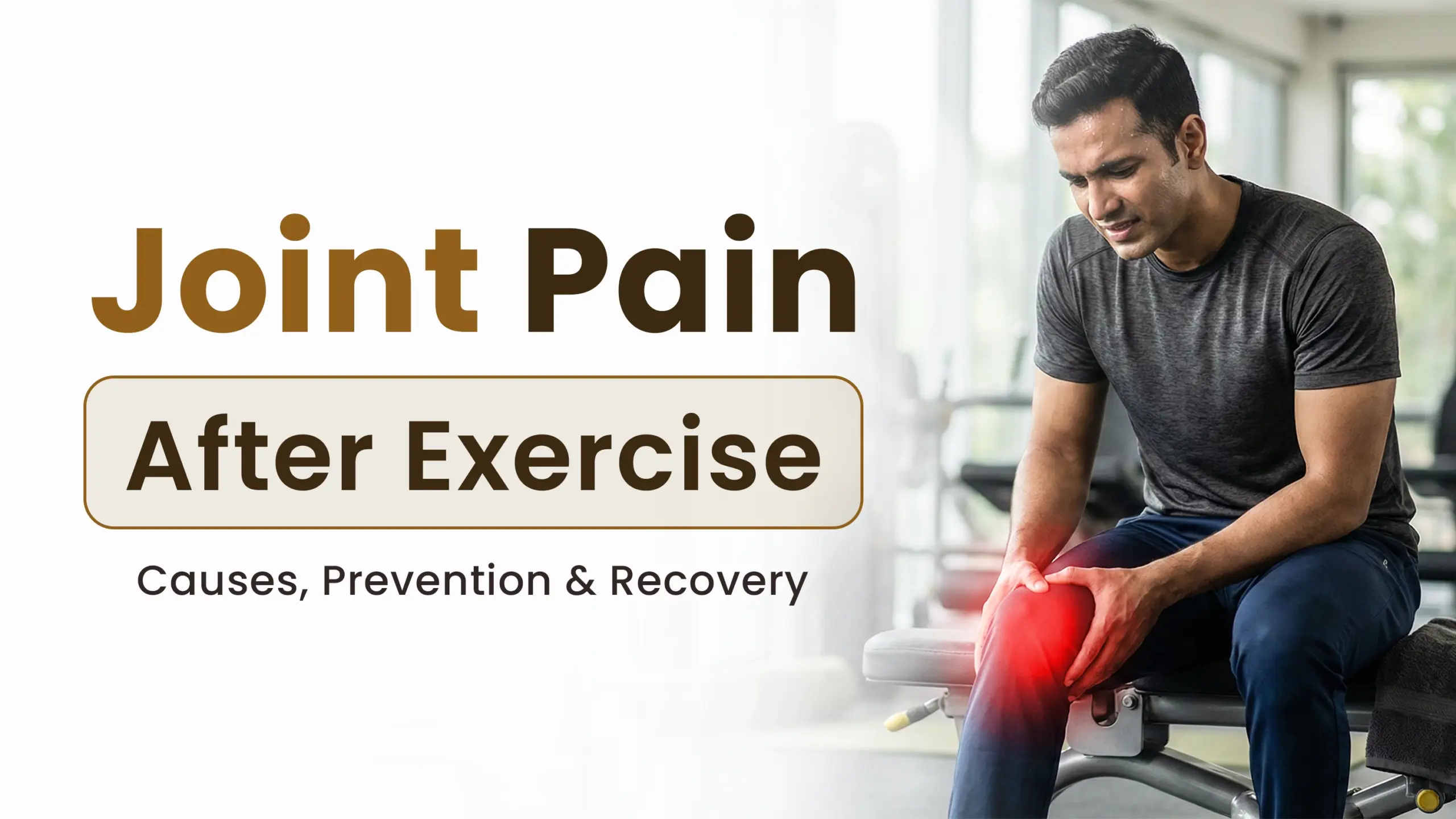
Everyone wants to be fit and tries to keep themselves healthy. Regular exercise is one of the best ways to do that. However, many people experience Joint Pain After Exercise, especially when they start working out regularly. Sometimes this pain starts during the workout, while many people feel it after finishing their exercise. You may feel energetic immediately after exercise, but the next day, you might not even be able to get out of bed due to Joint Pain.
Now, it is important to understand what joint pain actually is. The place where two bones meet in our body is called a joint, such as the elbow, shoulder, or knee. Feeling mild muscle soreness after exercise is normal, but repeated or intense Joint Pain After Workout should not be ignored. In such cases, along with proper rest and care, many people also look for natural support options like ayurvedic pain killer powder to help manage discomfort naturally. Here, we are talking about why joints feel stiff or painful after workouts.
Why Joints Feel Stiff or Painful After Workouts
It is normal to experience stiffness or pain in your joints after exercise because your joints and muscles go through a lot of stress during physical activity. In many cases, Joint Pain After Exercise happens because the muscles and joints are not used to sudden movement or load. Other common reasons include increasing workout intensity too fast, skipping warm-up before exercise, not stretching after workouts, extra pressure on joints during movement, poor workout form, wrong posture, and lack of calcium, vitamin D, or protein. Joint Pain After Exercise most commonly affects the knees.
Knee Pain After Working Out: Common Reasons
Knee pain after working out is very common. Studies show that knee pain occurs frequently in people who exercise regularly. In one study of 314 active individuals, nearly 1 in 3 people (31.8%) had knee problems, and 65% of them reported knee pain as their main symptom. The research also found that people involved in high levels of physical activity were more than twice as likely to face knee issues. This clearly shows how intense workouts can lead to Joint Pain, especially in the knees.
There are many reasons behind knee pain, and here we are sharing some of the most important and common issues related to Joint Pain After Exercise.
Patellofemoral Syndrome
Patellofemoral syndrome, also known as runner’s knee, is mainly caused by excessive pressure on the kneecap, muscle imbalance, or improper knee alignment. This condition develops when the kneecap rubs against the thigh bone repeatedly, leading to irritation, and discomfort.
Main Reasons for Patellofemoral Syndrome
- Too much pressure on the kneecap while walking, running, or sitting for long time
- Weak thigh muscles that cannot support the knee properly
- Muscles around the knee not working in balance
- Wrong posture or body alignment while moving
- Repeated activities like running, stair climbing, or jumping
- Suddenly increasing workout or exercise time
- Doing exercises in the wrong way
- Tight leg muscles that pull the kneecap out of place
- Not giving enough rest to the knees after activity
It is worth noting that Patellofemoral syndrome is one of the most commonly diagnosed conditions. Research shows that this problem affects around 25% to 40% of people who are active in daily activities and sports. It is more common in women than men, with a ratio of 2:1, and is usually seen in young adults aged between 20 and 30 years.
How to Prevent Joint and Knee Pain During Exercise
According to Dr. Anthony J. Costa, an orthopedic surgeon, there are several ways to protect your knees and reduce joint pain. People suffering from knee pain should avoid high-intensity workouts and instead choose low-impact exercises like cycling, swimming, treadmill walking, or rowing machines.
Avoid exercising on hard surfaces, as soft or cushioned surfaces reduce pressure on joints. Also, avoid bending your knees too much during exercises like squats, lunges, and burpees, as these movements put excessive pressure on the knees.
Always warm up before exercise. Start with light jogging for five to ten minutes, followed by stretching. Warming up improves blood circulation, while stretching prepares muscles and joints, reducing the risk of Joint Pain After Workout.
You can also follow the post-workout care tips suggested here:
Simple Recovery Tips for Post-Workout Joint Pain
➣ Follow a healthy and balanced diet
➣ Drink enough water
➣ Get a gentle massage
➣ Use topical relief solutions if needed
➣ Try foam rolling
➣ Keep your body moving lightly instead of complete rest
These steps help reduce joint pain and speed up recovery. However, recovery is not only about external care. To support joints from the inside and improve long-term joint health, many people also look toward natural and traditional systems like Ayurveda.
Ayurvedic & Herbal Support for Joint Pain
Joint pain has become a global issue today. While modern medicines mostly suppress symptoms, Ayurveda focuses on addressing the root cause. Ayurvedic herbs like Ashwagandha, Negad Beej, Neem, Giloy, Chop Chini, Indrayan Beej, Suranjan Shirin, Malkangani Beej, and Sudha Kuchla are traditionally used for managing every type of joint pain.
However, the correct dosage is very important. To avoid dosage errors, many people choose ready-made Ayurvedic supplements. While selecting such products, quality and formulation matter. In this case, Fauji360 can be considered a reliable option. It supports joint comfort, flexibility, and overall movement, helping reduce the chances of Joint Pain naturally.
Conclusion
Experiencing Joint Pain after a workout is common, but ignoring it can lead to long-term joint problems. Understanding the causes, following correct workout techniques, allowing proper recovery, and supporting the body with the right nutrition and Ayurvedic care can make a big difference. With consistent habits and natural joint support like Fauji360, you can stay active, recover better, and protect your joints for the long run.