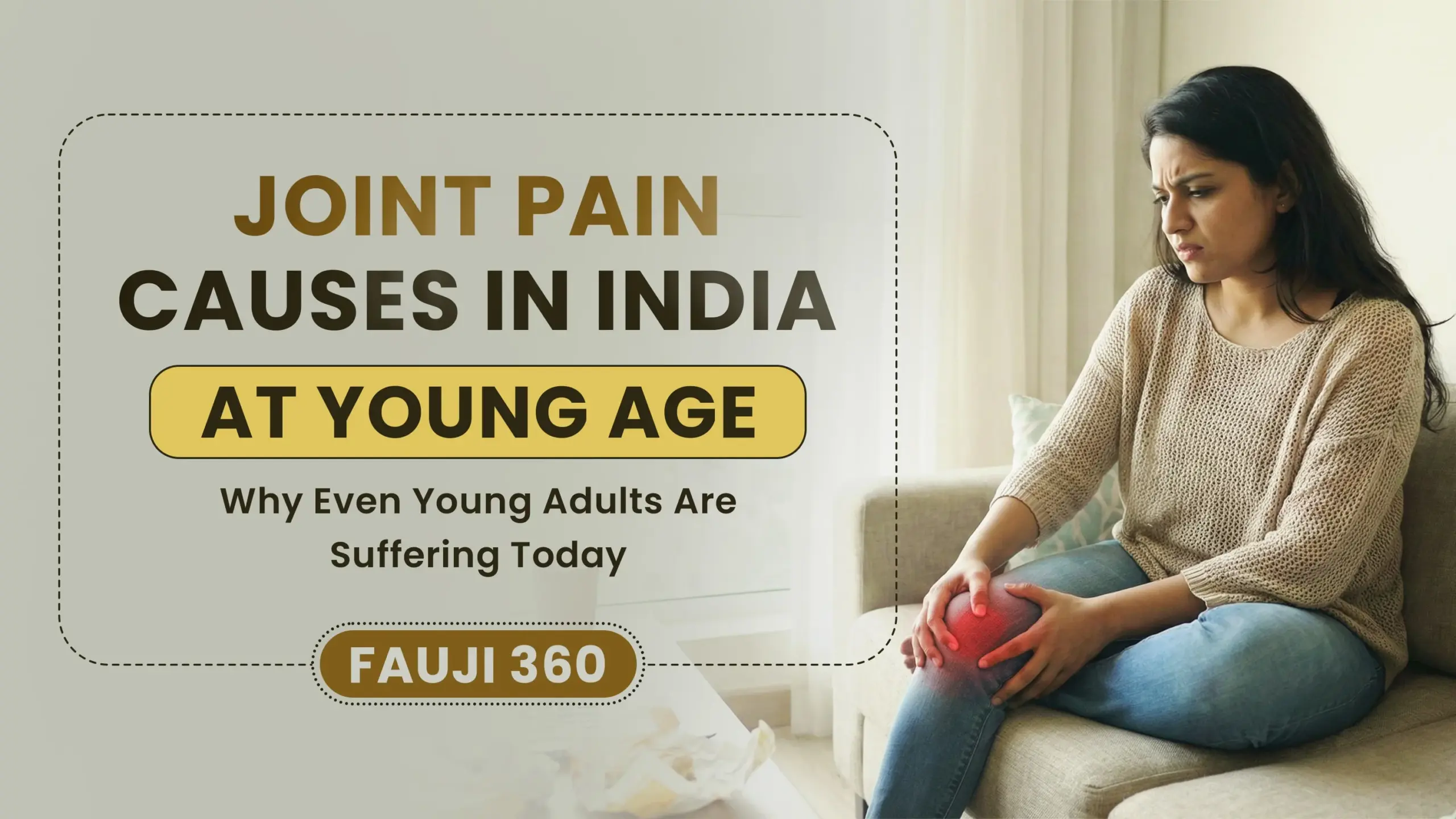
Joint pain was once considered a problem of old age. However, in recent years, joint pain causes in India at young age have increased alarmingly. Today, people in their 20s and 30s are frequently complaining about knee pain, back pain, shoulder stiffness, and joint discomfort.
So, why even young people in India have joint pain?
Let’s understand the real causes behind this growing problem and how lifestyle, diet, and daily habits are silently damaging joint health.
Why Joint Pain Is Increasing in Young Adults in India
India’s modern lifestyle has changed rapidly—but our bodies haven’t adapted as fast.
The joint pain problem in India’s young generation is mainly linked to unhealthy routines and poor physical care.
Some common reasons include:
- Long working hours
- Minimal physical activity
- Improper posture
- Nutritional deficiencies
These factors together explain why joint pain is increasing in young adults in India.
Lifestyle Causes of Joint Pain in India
One of the biggest contributors to early joint pain is lifestyle imbalance.
Sedentary Lifestyle in Indian Cities
Urban life promotes desk jobs, long commutes, and screen dependency. A sedentary lifestyle in Indian cities reduces joint lubrication and weakens muscles supporting the joints.
➡️ Long sitting hours and joint pain are directly connected.
Long Sitting Hours and Joint Pain
Sitting continuously for 8–10 hours compresses joints and reduces blood flow, leading to:
- Knee stiffness
- Lower back pain
- Hip joint discomfort
This is a major reason for joint pain in 20s and 30s in India.
Mobile Posture Pain in India
Excessive mobile usage causes poor posture, also known as “text neck.”
Mobile posture pain in India affects:
- Neck joints
- Shoulder joints
- Upper spine
Over time, this posture imbalance leads to chronic joint issues.
Reasons for Joint Pain in Indian Youth
Vitamin D Deficiency in India
Despite abundant sunlight, vitamin D deficiency in India is extremely common due to indoor lifestyles and sunscreen overuse.
Low Vitamin D leads to:
- Weak bones
- Joint inflammation
- Muscle pain
This deficiency is a major cause of early age joint pain in India.
Indian Diet and Joint Pain
Modern eating habits have shifted away from traditional balanced diets.
A poor Indian diet and joint pain connection exists due to:
- Excess junk food
- High sugar intake
- Lack of calcium and protein
This weakens joint cartilage and accelerates pain.
Lack of Exercise in Indian Lifestyle
Regular movement keeps joints flexible. Unfortunately, lack of exercise in Indian lifestyle is common among young professionals.
Without exercise:
- Joints lose strength
- Cartilage deteriorates faster
- Pain appears earlier than expected
Stress and Joint Pain in Indian Youth
Mental stress doesn’t just affect the mind—it affects joints too.
Stress and joint pain in Indian youth are connected through inflammation and muscle tension.
Chronic stress increases cortisol levels, which:
- Weakens bones
- Triggers joint stiffness
- Slows down healing
Causes of Early Age Joint Pain in India (Summary)
Here’s a quick breakdown of the causes of early age joint pain in India:
- Sedentary lifestyle
- Long sitting hours
- Poor posture & mobile usage
- Vitamin D deficiency
- Poor dietary habits
- Stress & lack of exercise
Together, these explain why joint pain is increasing in young adults in India.
Early Joint Pain Symptoms in Indian Adults
Many young people ignore initial signs. Watch out for these early joint pain symptoms in Indian adults:
- Morning stiffness
- Cracking sounds in joints
- Pain after sitting long
- Reduced flexibility
- Mild swelling
Ignoring these symptoms can lead to chronic joint disorders later in life.
How to Support Joint Health Naturally at a Young Age
Ayurveda emphasizes root-cause healing rather than temporary relief. Supporting joint health early can prevent long-term damage.
Natural support includes:
- Regular movement & stretching
- Balanced diet
- Stress management
- Herbal joint support
You can explore Ayurvedic herbal solutions by Fauji360 designed to support joint strength and mobility naturally.
Why Early Care Is Important for India’s Young Generation
The joint pain problem in India’s young generation is not just physical—it affects productivity, confidence, and quality of life.
Taking action early helps:
- Prevent chronic arthritis
- Maintain active lifestyle
- Improve overall mobility
Final Thoughts
The rise in joint pain causes in India at young age is a wake-up call.
Unhealthy lifestyle choices, poor nutrition, stress, and inactivity are silently harming young joints.
By understanding why even young people in India have joint pain and making conscious changes, it’s possible to protect joint health naturally and live pain-free.